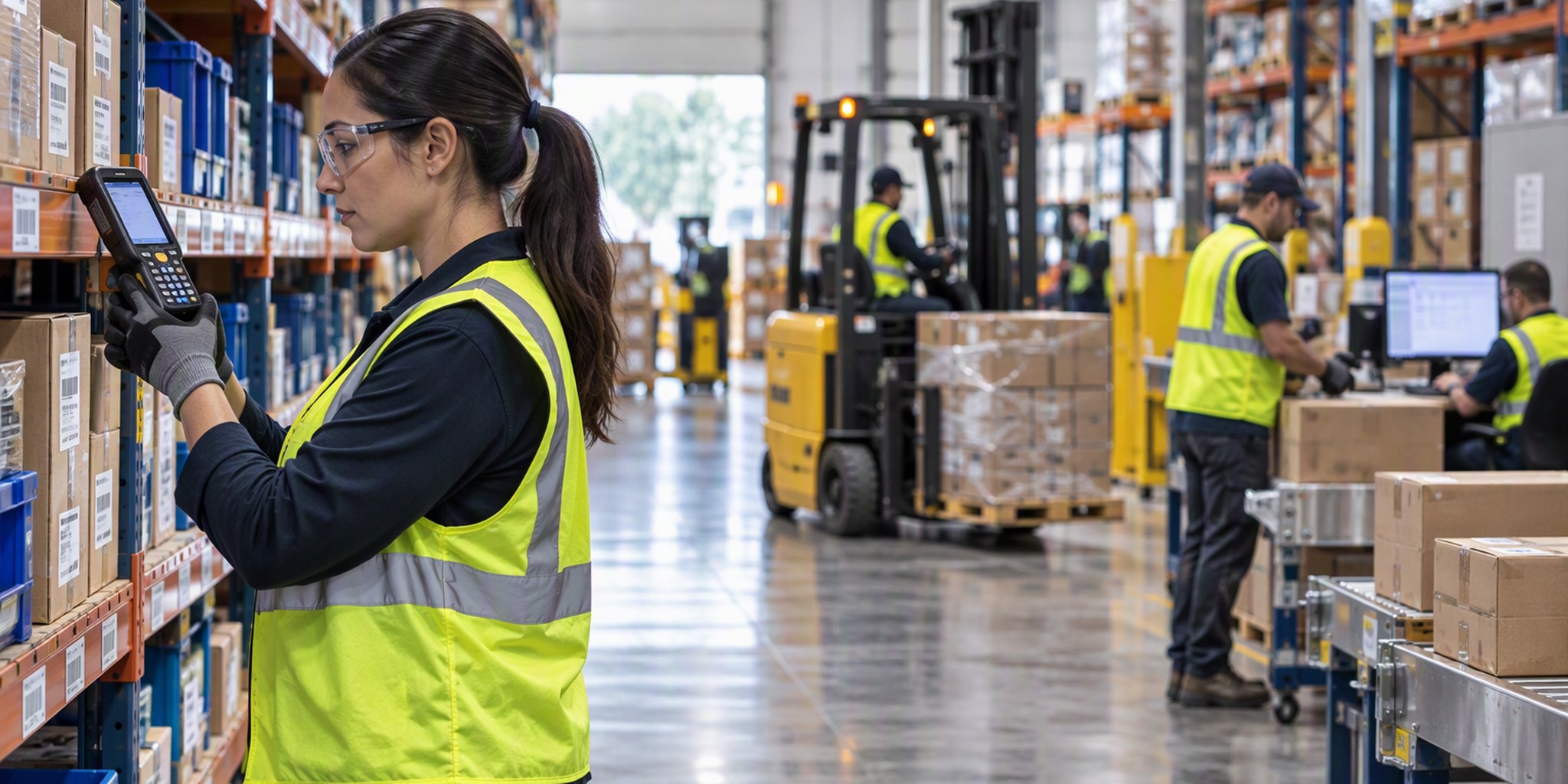
Replacing Desktop SAP Inventory Workflows in 2026
The Definitive Guide to Modernizing SAP Warehouse Operations with Mobile Execution
In 2026, many SAP-driven warehouses still depend on desktop transactions, paper forms, spreadsheets, and manual inventory updates to run mission-critical operations. While SAP remains the system of record, the way workers interact with SAP often creates unnecessary delays, inventory inaccuracies, labor inefficiencies, and operational bottlenecks.
Modern warehouse leaders are recognizing that the problem is not SAP. The problem is how warehouse teams execute SAP processes.
This guide explores why traditional desktop-based inventory management creates friction across warehouse operations and how mobile, standardized workflows help organizations improve inventory accuracy, increase throughput, reduce transaction delays, and create more scalable warehouse operations.
Whether supporting manufacturing plants, utilities, distribution centers, maintenance storerooms, or production facilities, organizations are increasingly replacing manual warehouse processes with SAP-native mobile execution.
Why Desktop-Based SAP Inventory Processes Are Holding Warehouses Back
Many SAP environments were originally designed around office-based users rather than frontline warehouse operators.
As a result, inventory transactions often require workers to:
- Write information on paper
- Walk to a workstation
- Enter SAP transactions manually
- Return to the warehouse floor
- Correct transaction errors later
- Reconcile discrepancies after the fact
While these steps may seem minor individually, they create significant operational drag at scale.
Typical examples include:
Goods Receipt Processing
A receiver unloads material, records quantities manually, and later enters receipts into SAP.
Result:
- Delayed inventory visibility
- Potential data entry errors
- Reduced receiving throughput
Warehouse Transfers
Material handlers move inventory between locations but postpone SAP updates until later.
Result:
- Inventory visibility gaps
- Incorrect stock locations
- Pick delays
Physical Inventory Counts
Inventory teams count materials manually, maintain paper sheets, and subsequently reconcile findings in SAP.
Result:
- Slow counting cycles
- Increased adjustment activity
- Lower inventory accuracy
Production Material Staging
Warehouse teams stage production inventory while relying on printed documents and manual updates.
Result:
- Missing materials
- Production delays
- Additional labor requirements
The common issue is that warehouse execution occurs separately from SAP transaction processing.
The Hidden Cost of Manual Warehouse Processes
Most organizations underestimate the impact of manual inventory activities.
The true cost extends beyond labor.
Inventory Accuracy Suffers
Every delayed transaction increases the chance that SAP no longer reflects physical reality.
Teams encounter:
- Incorrect stock balances
- Missing inventory
- Misplaced materials
- Duplicate inventory records
- Transaction exceptions
Over time, these issues undermine confidence in inventory data.
Warehouse Productivity Declines
When employees must repeatedly leave operational workflows to update SAP, valuable labor is lost.
Common examples include:
- Multiple trips to desktop terminals
- Re-entering handwritten information
- Resolving avoidable inventory discrepancies
- Searching for inventory recorded in incorrect locations
Operational Decision-Making Weakens
Inventory planners, production teams, procurement specialists, and maintenance personnel all rely on SAP inventory data.
When warehouse transactions are delayed:
- Inventory visibility decreases
- Planning accuracy declines
- Replenishment effectiveness suffers
- Emergency purchasing increases
Throughput Bottlenecks Increase
Warehouse leaders are often tasked with increasing volume without increasing headcount.
Desktop-based workflows become a major constraint because they add process steps that do not move inventory or create customer value.
What Warehouse Workflow Standardization Really Means
Many organizations focus on technology before addressing process consistency.
However, successful modernization begins with warehouse workflow standardization.
Standardized workflows ensure every worker follows the same process for:
- Receiving
- Putaway
- Picking
- Transfers
- Cycle counting
- Physical inventory
- Returns
- Replenishment
- Production material staging
When processes become standardized:
- Training becomes easier
- Errors decrease
- Performance becomes measurable
- Continuous improvement becomes possible
Technology then amplifies these process improvements.
Why Mobile SAP Execution Is Becoming the New Standard
Modern warehouse operations increasingly execute transactions at the point of work rather than at a desktop workstation.
Instead of workers adapting to SAP screens designed for office environments, SAP processes are brought directly to warehouse personnel through mobile devices.
This shift transforms operational efficiency.
Receive Material Where It Arrives
Using barcode-enabled mobile workflows, workers can:
- Verify material immediately
- Confirm quantities quickly
- Post receipts directly into SAP
- Eliminate delayed transaction processing
Inventory becomes visible to the organization immediately.
Confirm Inventory Movement at the Source
When materials move:
- The item is scanned
- The destination location is scanned
- SAP is updated instantly
This eliminates timing gaps that often create inventory discrepancies.
Count Inventory Faster
Mobile cycle counting processes allow workers to:
- Scan locations
- Verify materials
- Record counts
- Reconcile discrepancies
Without paper forms or duplicate data entry.
Accelerate Picking Operations
Warehouse teams gain:
- Guided picking workflows
- Barcode verification
- Reduced errors
- Faster transaction completion
This helps improve service levels while reducing labor requirements.
How Mobile Workflows Improve SAP Warehouse Inventory Management
Organizations that modernize warehouse execution often see improvements in five critical areas.
1. Inventory Accuracy
Real-time SAP updates reduce inventory discrepancies caused by transaction delays.
Benefits include:
- Improved stock visibility
- Reduced adjustments
- More reliable replenishment planning
- Greater trust in SAP data
2. Labor Productivity
Employees spend less time:
- Walking to workstations
- Re-entering data
- Correcting errors
And more time executing value-added warehouse activities.
3. Operational Throughput
Faster transaction processing improves:
- Receiving volume
- Picking productivity
- Inventory movement efficiency
- Warehouse capacity utilization
This directly supports greater manufacturing throughput and supply chain performance.
4. Compliance and Process Consistency
Mobile applications can enforce:
- Required process steps
- Barcode validation
- Standard operating procedures
- SAP transaction controls
This reduces variability between facilities and users.
5. User Adoption
Simplified user experiences encourage greater compliance than traditional SAP desktop transactions.
When systems become easier to use, process adherence typically improves.
The Role of SAP Inventory Automation
Warehouse modernization is not simply about mobility.
It is also about reducing unnecessary manual intervention.
SAP inventory automation helps organizations:
- Eliminate duplicate transaction entry
- Reduce paper dependencies
- Accelerate transaction processing
- Improve inventory visibility
- Improve decision-making
Examples include:
Automated Replenishment Triggers
Inventory movement automatically initiates replenishment processes.
Exception-Based Management
Managers focus on inventory exceptions rather than reviewing every transaction.
Barcode-Driven Validation
The system verifies materials, locations, and quantities during execution.
Real-Time Inventory Updates
SAP reflects warehouse activity immediately.
The result is greater operational control with fewer manual touchpoints.
Why Utilities and Manufacturers Are Prioritizing Mobile Warehouse Execution
Asset-intensive industries face increasing pressure to improve inventory performance without significantly increasing labor costs.
Utilities require:
- Accurate storeroom inventory
- Vehicle stock visibility
- Maintenance materials management
- Regulatory compliance
Manufacturers require:
- Production material availability
- Inventory accuracy
- Faster replenishment
- Reduced downtime
In both cases, desktop transactions introduce friction that limits operational performance.
Mobile execution removes those barriers and enables workers to interact with SAP as activities occur.
A Practical Roadmap for Replacing Desktop Inventory Processes
Organizations should not attempt to modernize every inventory process simultaneously.
Successful initiatives usually begin with high-volume workflows such as:
Phase 1
- Goods receipt
- Inventory transfers
- Cycle counting
Phase 2
- Picking
- Putaway
- Replenishment
Phase 3
- Production supply
- Maintenance inventory
- Advanced warehouse workflows
This phased approach minimizes risk while producing measurable operational improvements.
Why Havensight H1 Helps Modernize SAP Warehouse Operations
H1 extends SAP with mobile-first warehouse execution capabilities designed specifically for organizations that require real-time inventory visibility and operational simplicity.
Key capabilities include:
- SAP-native architecture
- Real-time SAP transactions
- Barcode-enabled workflows
- Offline-capable execution
- Warehouse workflow standardization
- Inventory accuracy improvements
- Cross-warehouse process consistency
- Support for SAP ECC and SAP S/4HANA
Rather than replacing SAP, H1 helps warehouse teams execute SAP processes more efficiently where work actually occurs.
Conclusion
The future of SAP warehouse inventory management is not about replacing SAP. It is about transforming how workers interact with SAP.
Organizations that continue relying on desktop-based inventory management, paper processes, and delayed transactions will face increasing pressure from labor constraints, inventory accuracy requirements, and operational performance expectations.
Mobile, standardized warehouse workflows provide a practical path forward.
By bringing SAP execution directly to warehouse personnel, organizations can reduce process delays, improve inventory accuracy, increase throughput, and build a stronger foundation for modern warehouse operations.
Stop Managing SAP Inventory from a Desktop
See how H1 helps warehouse teams execute SAP inventory transactions in real time using mobile, barcode-enabled workflows that improve inventory accuracy, productivity, and throughput.
Frequently Asked Questions About SAP Warehouse Inventory Management
Want even more reading?
Manual SAP Warehouse Bottlenecks in Manufacturing