Why Utility Field Crews Struggle With SAP Inventory
Why Utility Field Crews Struggle With SAP Inventory Management
Utility organizations depend on accurate inventory to keep critical infrastructure operating safely and reliably. Whether crews are restoring power after a storm, replacing a transformer, repairing a water main, or performing routine maintenance, they need immediate access to the right materials at the right time.
Yet many utility organizations continue to struggle with inventory accuracy despite investing heavily in SAP.
The issue is rarely SAP itself.
More often, the challenge lies in how inventory transactions are executed in the field. The farther inventory moves from the warehouse, the harder it becomes to maintain accurate records. Materials pass through service centers, substations, staging yards, contractor locations, and truck stock before they are ultimately consumed.
Every additional handoff creates an opportunity for inventory data to diverge from reality.
This is why improving SAP inventory management for utilities requires more than warehouse controls. It requires modernizing how field crews interact with inventory every day.
The Inventory Accuracy Problem Starts Outside the Warehouse
Most utilities maintain relatively strong controls inside central warehouse operations.
Inventory discrepancies often emerge after materials leave the warehouse.
Consider a typical journey for utility inventory:
- Material is received at a central warehouse.
- Material is transferred to a service center.
- Material is issued to a crew vehicle.
- Material is transported to a job site.
- Material is installed, partially consumed, returned, transferred, or replaced.
Each step should be recorded in SAP.
In reality, many of these activities are delayed, performed manually, or documented after the fact.
The result is a growing gap between physical inventory and SAP inventory records.
Over time, utility organizations experience:
- Lower inventory accuracy
- Frequent stock discrepancies
- Delayed replenishment
- Emergency purchases
- Excess safety stock
- Reduced confidence in inventory data
Why Traditional SAP Inventory Processes Create Challenges for Field Crews
1. SAP Transactions Were Designed for Systems, Not Field Work
Many utility organizations still rely on mobile solutions that expose users directly to SAP transactions.
Field personnel may need to:
- Select the correct transaction
- Enter material numbers
- Type work order information
- Navigate multiple screens
- Understand inventory movement types
- Make decisions about process sequencing
The problem is that utility technicians are experts in maintaining infrastructure, not SAP transaction design.
When inventory processes require workers to understand ERP logic, mistakes become inevitable.
Even highly experienced employees can struggle with transaction-heavy interfaces while working outdoors, in poor weather, during emergencies, or under time pressure.
2. Manual Data Entry Creates Errors
Field inventory transactions frequently rely on:
- Material numbers
- Serial numbers
- Asset identifiers
- Equipment numbers
- Work order references
- Storage locations
Typing this information manually introduces risk.
Common errors include:
- Incorrect material selection
- Transposed numbers
- Wrong quantities
- Invalid storage locations
- Duplicate entries
A single data entry mistake can create inventory discrepancies that take weeks or months to discover.
The more information workers must manually enter, the greater the likelihood of inventory inaccuracies.
3. Tribal Knowledge Replaces Standard Processes
Many utilities depend heavily on experienced employees who understand how inventory processes work.
These individuals often know:
- Which SAP screens to use
- How to handle exceptions
- Where inventory is actually located
- Which workarounds are commonly used
While this knowledge helps operations continue, it creates inconsistency.
Two employees performing the same task may execute inventory transactions differently.
As retirements accelerate across the utility workforce, organizations risk losing critical operational knowledge that exists only in employees’ heads.
4. Field Crews Work Where Connectivity Is Unreliable
Utilities rarely operate in ideal network environments.
Technicians often work in:
- Rural territories
- Underground vaults
- Remote substations
- Storm restoration zones
- Construction sites
- Mountainous regions
When mobile applications require continuous connectivity, workers frequently postpone transactions until they return to coverage.
Unfortunately, delayed transactions create multiple problems:
- Inventory updates occur hours later
- Materials are forgotten
- Quantities are estimated
- Paper notes become the system of record
- Inventory visibility degrades
By the time data reaches SAP, inaccuracies may already exist.
5. Truck Stock Is Often the Largest Blind Spot
One of the biggest challenges in utility field crew inventory management is truck stock.
Utility vehicles commonly carry:
- Meters
- Transformers
- Cable
- Connectors
- Fuses
- Valves
- Service parts
- Repair materials
Without disciplined controls, truck inventory quickly becomes disconnected from SAP.
Organizations frequently encounter situations where:
- Materials are consumed but never recorded
- Inventory is transferred between vehicles
- Items are borrowed between crews
- Counts occur infrequently
- Replenishment relies on estimates
As truck inventory grows, so does the gap between actual inventory and what SAP believes is available.
The Real Cost of Poor SAP Inventory Accuracy
Inventory inaccuracies create operational consequences that extend far beyond the warehouse.
Delayed Field Work
Crews arrive expecting materials to be available, only to discover inventory records are incorrect.
This results in:
- Additional travel
- Lost productivity
- Extended outages
- Delayed service restoration
Excess Inventory Investment
When planners lose confidence in inventory data, they compensate by carrying more inventory.
This often leads to:
- Overstock situations
- Higher carrying costs
- Increased warehouse space requirements
- Obsolete inventory risks
Emergency Purchasing
Missing inventory frequently triggers expedited purchasing.
Emergency orders typically cost more than planned procurement and place additional strain on procurement teams.
Reduced Workforce Productivity
Technicians should be maintaining infrastructure, not searching for materials, correcting inventory records, or navigating complex SAP transactions.
Every minute spent resolving inventory issues is a minute not spent serving customers.
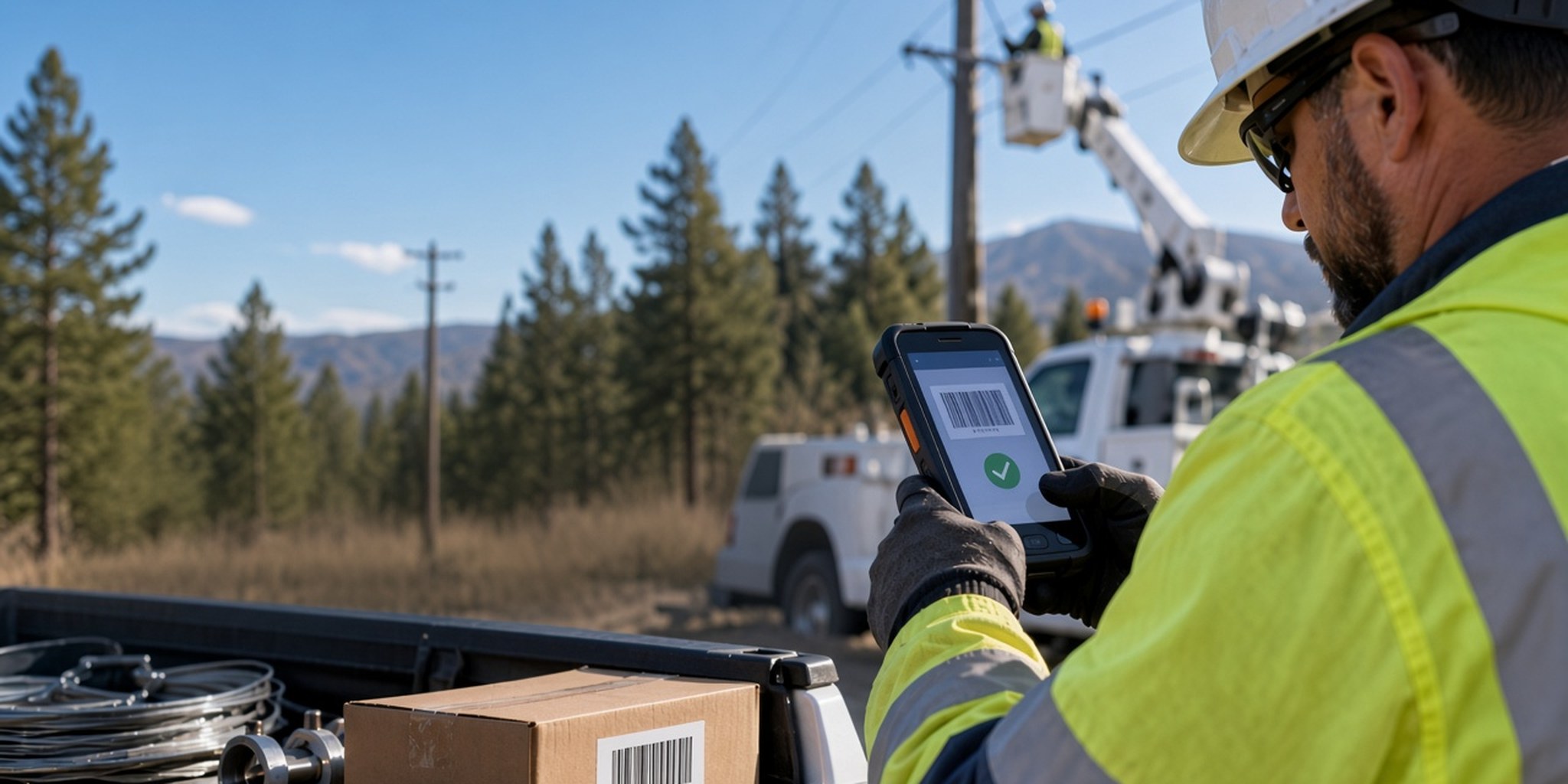
How Scan-First Workflows Reduce Utility Inventory Errors
The most successful utilities remove unnecessary manual decisions from inventory execution.
Rather than asking workers to navigate SAP transactions, modern scan-first workflows guide employees through tasks.
Instead of entering information manually, users scan:
- Material barcodes
- Bin locations
- Equipment labels
- Work orders
- Serialized assets
The system then uses SAP data to determine the next step automatically.
Benefits include:
- Fewer keystrokes
- Reduced training requirements
- Faster transaction completion
- Fewer data entry errors
- Improved consistency across locations
When operators scan first and transact second, inventory accuracy improves naturally.
Why Offline Inventory Execution Is Critical
Many organizations view offline capability as a convenience.
For utilities, it is an operational necessity.
A modern offline inventory solution allows users to:
- Issue inventory
- Transfer stock
- Receive materials
- Complete counts
- Process returns
even when connectivity is unavailable.
Transactions are stored locally and synchronized with SAP when the connection returns.
This approach eliminates the need for:
- Paper notes
- Delayed updates
- Manual reconciliation
- End-of-day transaction entry
As a result, inventory visibility remains accurate regardless of location.
Utility-focused SAP inventory solutions increasingly emphasize offline execution as a requirement for field operations because utility work frequently occurs beyond reliable network coverage.
Why Guided Mobile Workflows Matter
The highest-performing utility organizations are shifting from transaction-driven mobile applications to workflow-driven execution.
Instead of asking employees what they want to do next, guided workflows:
- Present the correct process automatically
- Enforce business rules
- Validate inventory movements
- Handle exceptions consistently
- Reduce reliance on user judgment
The result is greater consistency across:
- Warehouses
- Service centers
- Satellite depots
- Truck stock
- Field operations
The Future of Utility Materials Management
Utilities face increasing pressure to improve operational efficiency while supporting aging infrastructure, workforce transitions, severe weather events, and growing service expectations.
To address these challenges, leading organizations are investing in:
- Mobile-first SAP execution
- Offline-capable inventory processes
- Scan-first workflows
- Real-time inventory visibility
- Guided transaction execution
- Automated SAP validations
- Barcode and RFID technologies
The goal is not simply faster transactions.
The goal is ensuring every inventory movement is captured accurately, consistently, and in real time.
Conclusion
Utility field crews do not struggle with SAP inventory because SAP is incapable of managing inventory. They struggle because traditional inventory processes often require workers to manually execute complex transactions in challenging operational environments.
When organizations rely on manual entry, delayed transactions, tribal knowledge, and continuous connectivity, inventory accuracy inevitably suffers.
Modern SAP inventory management for utilities takes a different approach. By combining scan-first workflows, offline transaction capabilities, and guided mobile execution, utilities can dramatically improve SAP inventory accuracy, strengthen field service inventory control, and create reliable utility materials management processes that support crews wherever work takes place.
Frequently Asked Questions About Utility Field Inventory
Read Next:
Building Resilient Utility Supply Chains with SAP-Native Inventory Execution
Want even more reading?
Breaking the Cycle: How a U.S. Utility Modernized SAP Warehouse Execution and Transformed User Adoption